SpaceX launches Bandwagon-5 with second Starfall capsule
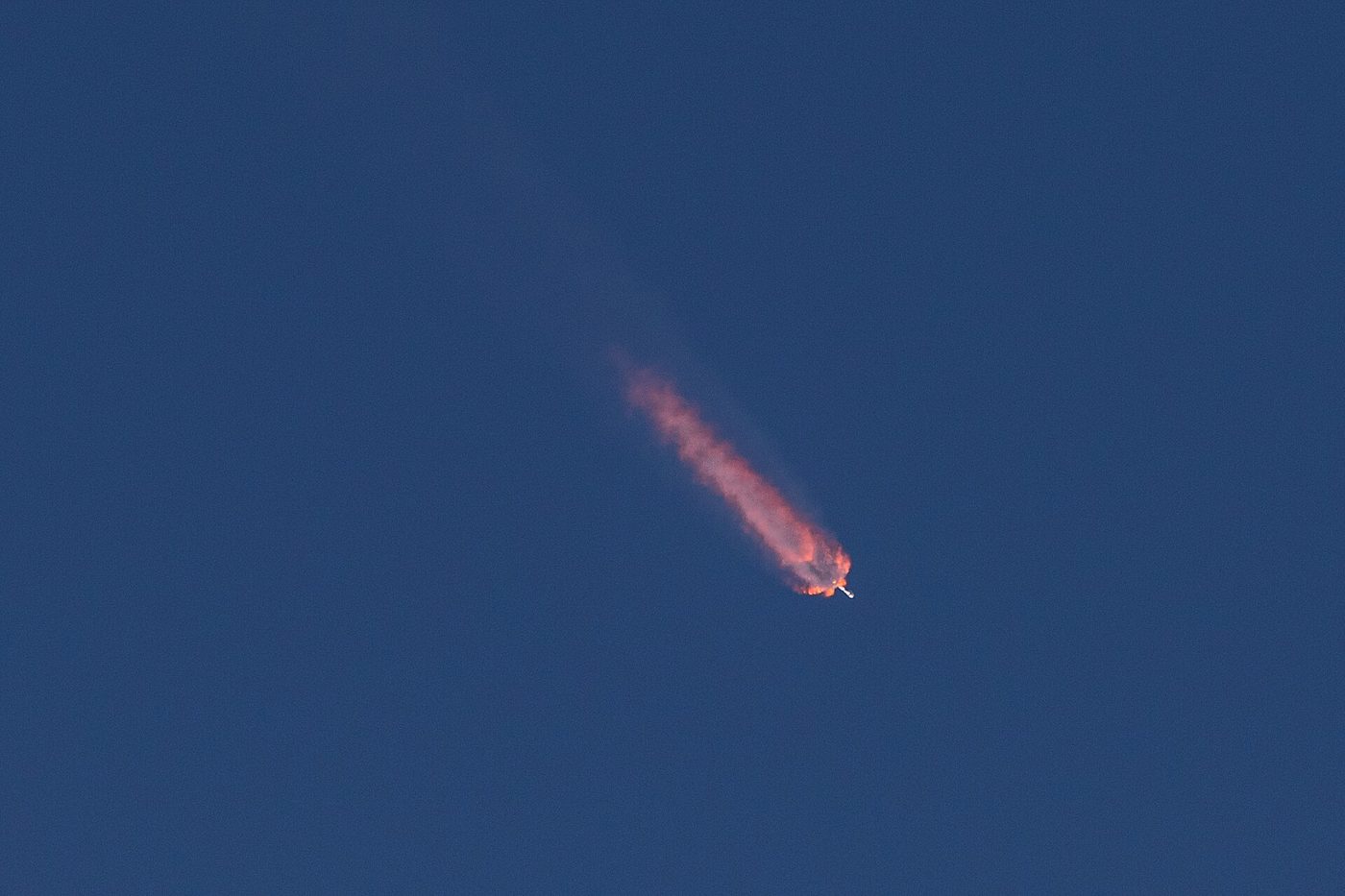
SpaceX launched its Bandwagon-5 rideshare mission on a Falcon 9 rocket from Cape Canaveral at 7:04 AM ET Tuesday, Space.com reported. The rocket carried 32 payloads. One is SpaceX's second Starfall capsule, built to bring cargo back from space. The booster landed on a droneship, Space.com and Florida Today reported.
SpaceX launched its Bandwagon-5 rideshare mission from Cape Canaveral Space Force Station in Florida at 7:04 AM EDT on Tuesday, Space.com reported. The launch came a day after poor weather in the booster recovery zone forced SpaceX to scrub a Monday attempt, Spaceflight Now reported.
The Falcon 9 rocket lifted off from Space Launch Complex 40 carrying 32 payloads, Space.com and Spaceflight Now reported. SpaceX had pushed the target liftoff time back from 6:30 AM to 7:04 AM, Florida Today reported.
The first-stage booster, which Spaceflight Now identified as B1085, landed on the droneship A Shortfall of Gravitas in the Atlantic Ocean about nine minutes after liftoff, completing its 19th flight, Space.com and Florida Today reported. SpaceX deployed all of its customer payloads, Spaceflight Now reported in an 8:45 AM EDT update. Starfall was scheduled to be the last payload to separate, two hours and 48 minutes after liftoff, Space.com reported.
Among the payloads was SpaceX's second Starfall capsule, mounted atop the satellite stack, NASASpaceFlight reported. Starfall is a disk-shaped reentry vehicle that can stay in space indefinitely and be brought back and recovered at any time, NASASpaceFlight reported. It measures 3.1 meters across, has a mass of 2,100 kilograms and can carry up to 1,000 kilograms of cargo, NASASpaceFlight reported. SpaceX plans to use it for point-to-point cargo delivery and to bring back goods made in microgravity, NASASpaceFlight reported. The first Starfall demonstration launched on June 23, NASASpaceFlight reported.
The capsule uses small nitrogen thrusters to orient itself, a heat shield it can drop, and a parachute-assisted splashdown, NASASpaceFlight reported. These first tests are planned to land in the Pacific Ocean about 1,300 kilometers off the coast of the United States or Mexico, NASASpaceFlight reported.
Rideshare missions let small satellite companies and schools launch payloads of up to 50 kilograms for $350,000, NASASpaceFlight reported.
What we know: SpaceX launched Bandwagon-5 with 32 payloads, including a Starfall capsule, on Tuesday, and the booster landed on a droneship.
What we don't: Whether the Starfall capsule separated as planned and when it will return to Earth.
Where outlets agree Space.com and Florida Today report that SpaceX launched Bandwagon-5 from Cape Canaveral on Tuesday and that the Falcon 9 booster landed on the droneship A Shortfall of Gravitas.
Where they differ NASASpaceFlight reported before the launch that the window would open at 6:30 AM EDT, while Space.com reported that the rocket lifted off at 7:04 AM EDT.