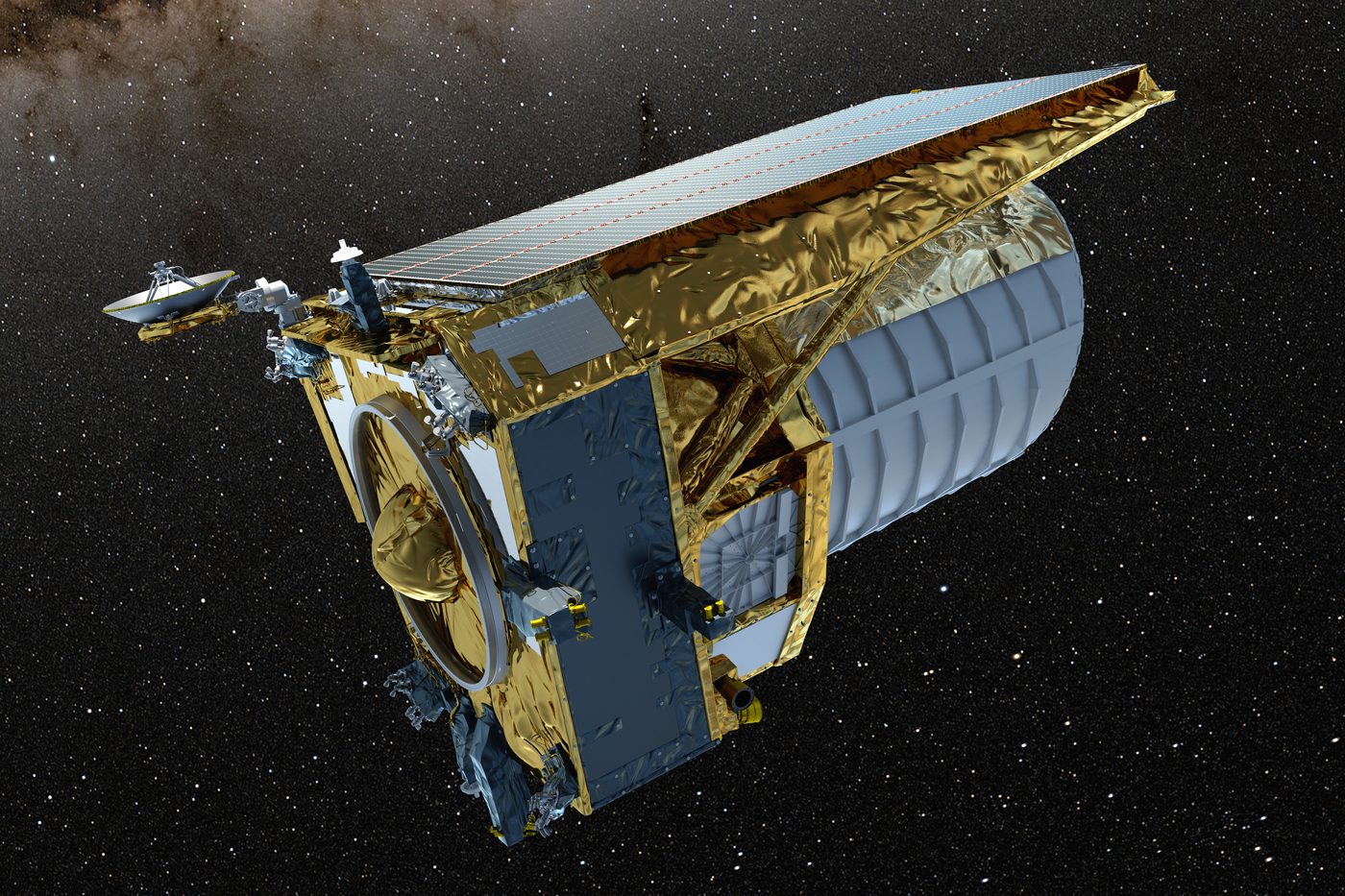
Euclid telescope releases data on 900 million galaxies
The European Space Agency's Euclid telescope released its first major survey data, mapping more than 900 million galaxies and about 15,000 rare lensing candidates. Scientists will use the trove to study dark matter and dark energy. The release covers about 14% of the planned survey.
The European Space Agency's Euclid telescope has released its first major batch of survey data, covering more than 900 million galaxies, The Guardian and Reuters report. The release, which ESA calls DR1-Foundation, also includes about 15,000 candidates for strong gravitational lensing, a rare bending of light that can help scientists study dark matter. Reuters says that total exceeds the number found in the previous half century. Professor Andy Taylor of the University of Edinburgh, who leads the UK science ground segment for the mission, said in remarks to The Guardian that it is "the biggest high-resolution image of the universe we've ever had."
The data cover about 14% of the sky area Euclid is due to survey, the Guardian, Reuters, and ESA say. Reuters says the release draws on about 13 months of observations and amounts to 1.7 petabytes of data. It also includes more than 60 million potential quasars, the Guardian and Reuters report. ESA says a fuller Data Release 1 is due in mid-2027. Euclid launched in July 2023. Its aim is to build a 3D map that can shed light on dark matter and dark energy, which are thought to make up most of the universe.
Taylor said the new lensing candidates compare with about 1,000 strong-lensing cases experts previously knew of, The Guardian reports. Strong lensing occurs when a nearby galaxy magnifies a more distant one. Scientists hope the larger sample will help them test ideas about how dark matter is spread.
What we know: Euclid's first major data release maps more than 900 million galaxies and about 15,000 strong-lensing candidates, covering about 14% of the planned survey. What we don't know: What the first dark-matter and dark-energy results from the full Data Release 1 will show when that release is completed.
Where outlets agree Euclid's first major data release maps more than 900 million galaxies and about 15,000 strong gravitational-lensing candidates, covering about 14% of the planned survey, The Guardian, Reuters, and ESA report.
Where they differ The cited reports agree on the key facts so far.