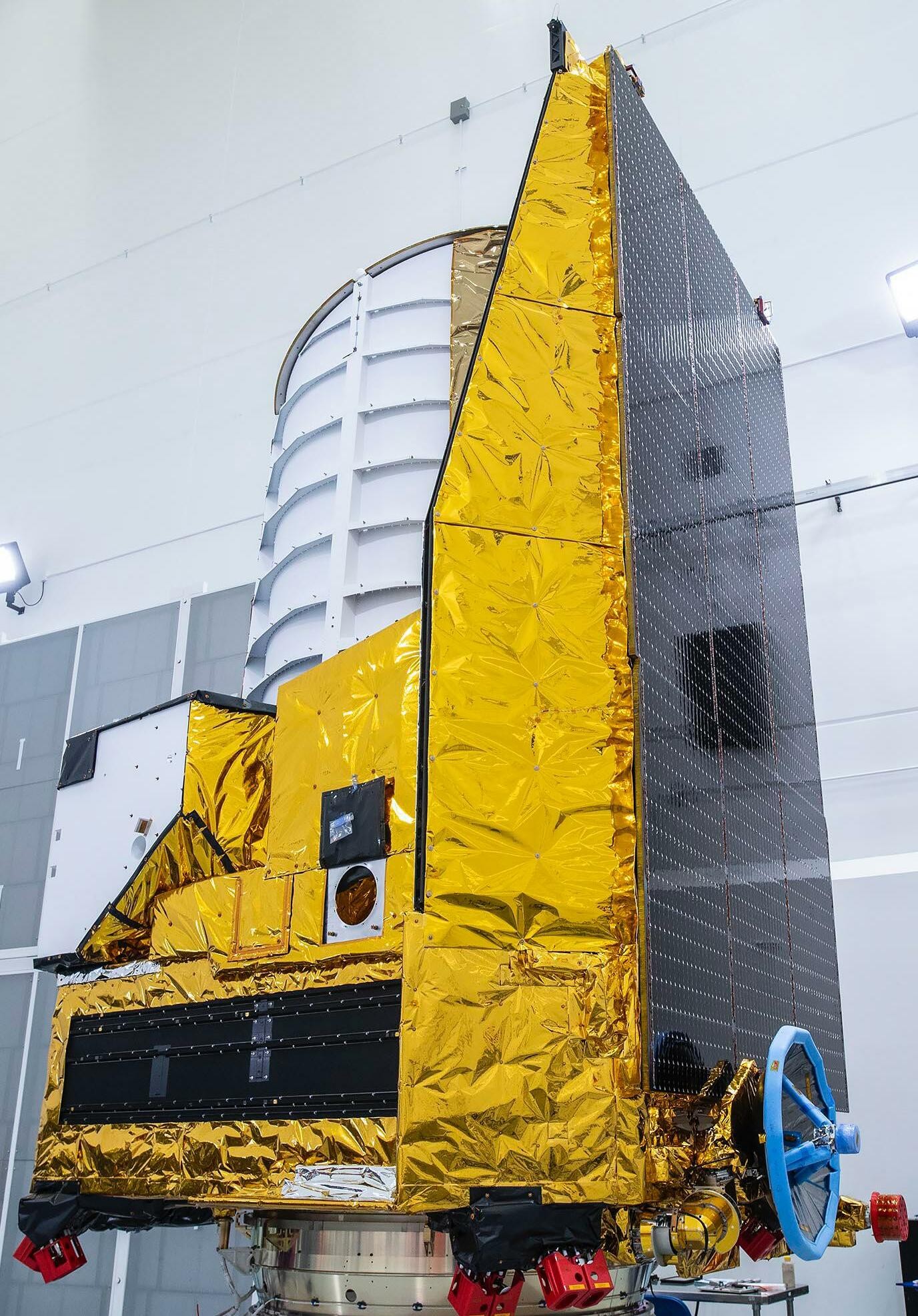
Euclid telescope catalogs nearly a billion celestial objects
According to Scientific American, Europe's Euclid telescope has issued its first big data set, listing nearly a billion objects in the sky. The list includes more than 900 million galaxies and 60 million possible bright galaxy cores. The space agency called it the largest such survey from orbit.
According to Scientific American, Europe's Euclid space telescope on November 12 issued its first major set of views of the sky, a release called DR1-Foundation. The magazine says the telescope has already listed nearly a billion objects. The goal is to help astronomers build the most detailed 3-D map of the universe yet made.
Euclid launched in July 2023. It uses a huge camera that records visible light, with hundreds of millions of pixels, to record the sky, the report says. The new list includes more than 900 million galaxies and 60 million possible quasars. Those are the very bright cores of galaxies, where hot gas falls into a huge black hole. The data add up to more than 1.7 million gigabytes. Earlier image releases had covered a much narrower strip of sky.
Carole Mundell, science director at the European Space Agency, said in a statement that the release is the "largest space-based survey of its kind, laying the foundation of future discovery in a new regime for astronomy," the magazine reports. The telescope also uses a natural effect in which gravity from huge objects bends and brightens light from objects farther away. The agency says Euclid has found about 15,000 strong cases of that effect. Scott Gaudi, an Ohio State astronomer who is not part of the Euclid program, called that haul "bonkers." He said such sharp images cannot be made from the ground.
Earlier Euclid image drops had been much smaller, the magazine notes.
Only Scientific American has reported this so far; NewsHabit hasn't seen independent confirmation.
What we know: Scientific American, citing the European Space Agency, reports that Euclid's first major data release covers nearly a billion objects, including more than 900 million galaxies and 60 million possible quasars. What we don't know: How quickly the new catalog will yield discoveries, or whether another news outlet will describe the release.
Where outlets agree Scientific American reports that Euclid's first major data release, DR1-Foundation, covers nearly a billion celestial objects.
Where they differ The European Space Agency's statement is the basis of Scientific American's report, which adds comment from one outside astronomer, Scott Gaudi.