Study says Earth's mantle helps explain Grand Canyon's missing rock
A new study offers an answer to why more than a billion years of rock is missing from the Grand Canyon, Live Science and Ars Technica report. Models suggest slow currents in Earth's mantle lifted continents, letting glaciers grind them down, then let them sink again.
A new study offers an answer to why more than a billion years of rock is missing from the Grand Canyon, Live Science and Ars Technica report. Models suggest slow currents in Earth's mantle lifted continents, letting glaciers grind them down, then let them sink again.
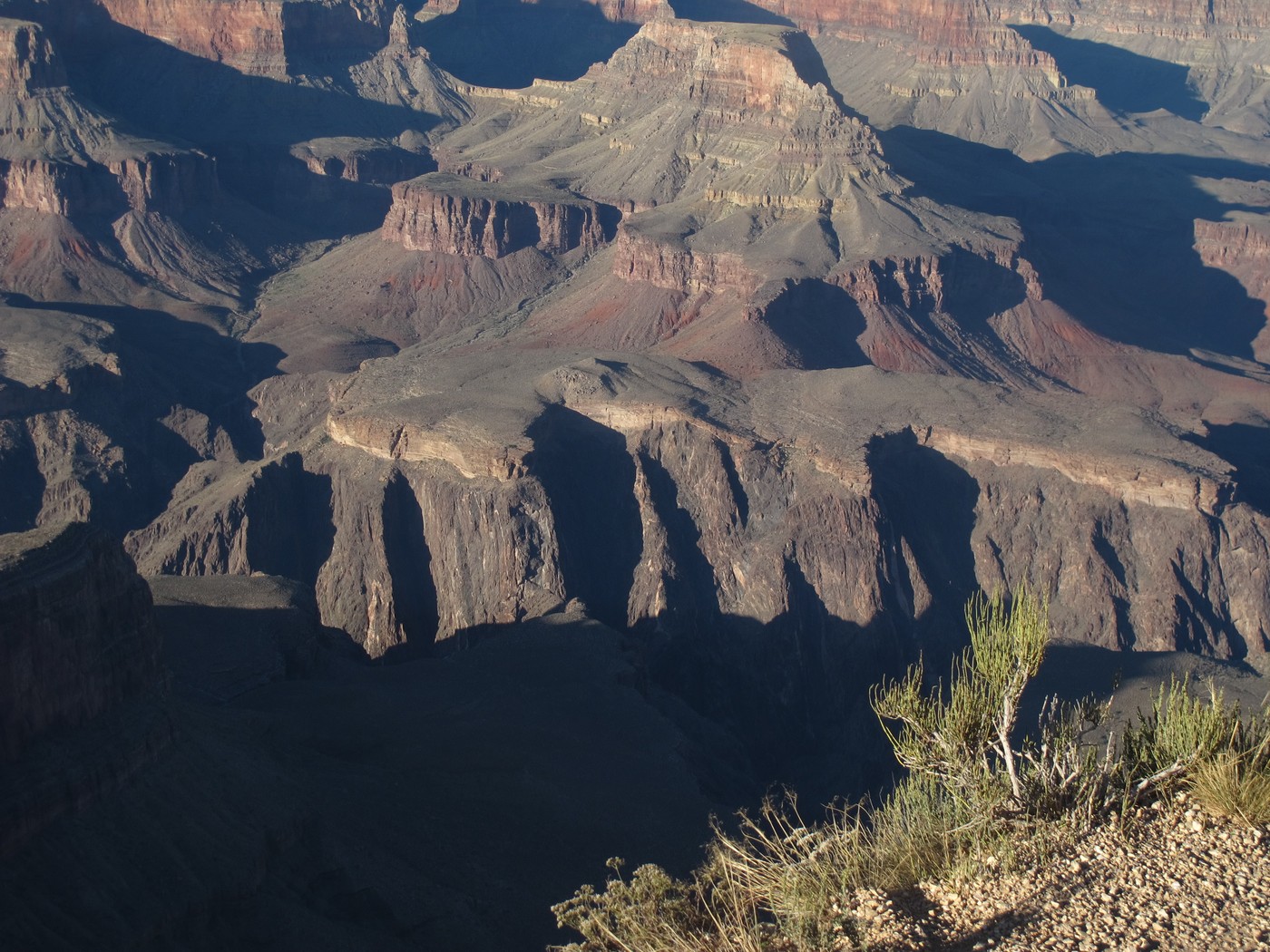
In the canyon's walls, rocks about 1.7 billion years old sit directly under sedimentary rocks laid down about 500 million years ago, Live Science reports. The gap between them is called the Great Unconformity. Similar gaps appear across North America, the Baltic region of Europe and northern China.
Nicolas Flament, a geoscientist at the University of Wollongong in Australia, and Santosh Dhungana published the study in the journal Nature, Ars Technica reports. They ran six models of how the mantle moved over the past billion years. "An analogy would be a lava lamp, where some stuff comes up and some stuff comes down," Flament said, according to Ars.
The models show the mantle pushed those three regions up during the time the gap formed, Live Science says. In the past 540 million years, the same areas began sinking, which let new sediment pile up and preserved the gap.
The uplift alone was too gentle to strip away enough rock, Ars Technica reports. Glaciers from the period known as Snowball Earth did much of the grinding. "This gentle uplift that's continuous, and then that glacial erosion that comes on top, work together," Flament said, according to Ars.
Shanan Peters is a geologist at the University of Wisconsin-Madison who was not part of the study. He said the mantle idea "seems to me to be the only reasonable way to go back and forth between this state over time," Live Science reports.
The researchers also described their results in an article for The Conversation, republished by Scientific American. "Forces deep beneath our feet have left planet-scale marks in the geological record," they wrote.
What we know: A Nature study links the Great Unconformity to mantle-driven uplift combined with glacial erosion, then sinking that preserved the gap. What we don't know: Whether rock records from Africa and Russia will support the models, which Flament says still need checking.
Where outlets agree Live Science and Ars Technica report that a Nature study links the Great Unconformity to slow mantle currents that lifted and later lowered continents, with glaciers eroding the uplifted land.
Where they differ The cited reports agree on the key facts so far.